
Work · Case study 02 · Fennec · Live
A venue operating system, live tonight.
A venue running separate tools is running separate versions of the same night. The floor plan is a drawing. Tickets sell somewhere else. The guestlist is a spreadsheet or a text thread. The bar runs on a POS that has never heard of the table. Marketing is a separate address book.
- Client
- Fennec, fennecapp.com (co-founded)
- Sector
- Premium nightlife and events
- Status
- Live
- What we built
- A venue operating system: floor plans, live ops, ticketing, guest CRM, bottle service, inventory, campaigns and analytics, with the Ferry AI agent network underneath
- Integrations
- Two-way POS sync with Square, Toast and Lightspeed
- Venues
- Harbour Event Centre, TradeX, The Pit UBC, The Show Ottawa, plus 20+ event companies
- Architecture
- Core and Ferry AI network architected by Vishal Desh, Co-Founder
01 · Context
A venue does not need five tools. It needs one record of the night.
Fennec is an operating system, not a feature. It runs the floor, the door, the bar, the bottles, the coat check, the guest record, the campaigns and the count in the stock room, off one set of records that every surface reads at the same time.
02 · The old way
What a disconnected stack looks like on a Saturday.
A venue running separate tools is running separate versions of the same night. Each one is right about its own slice and wrong about everything else, and the reconciliation happens in a group chat at 11pm.
The floor plan is a drawing that cannot tell anyone which table is still free. Tickets sell on a third-party page that knows the guest bought and nothing about where they will sit. The guestlist is a spreadsheet or a text thread, stale by midnight. The bar runs on a POS that has never heard of the table. Marketing is a separate address book.
03 · Bottleneck
Availability lived in a thread between a promoter, a host and an owner.
Every one of them held a slightly different version of it. The same table could be sold twice. Somebody had to phone the office to ask whether T3 was gone.
04 · Why off-the-shelf did not fit
Five products, five records.
Each tool was right about its own slice. None of them could be the record of the night, because none of them knew about the others. An agent cannot tell you what is leaking if the numbers are sitting in five accounts that never speak.
08 · Fennec · Live
One system running the room, the door and the bar.
A venue does not need five tools. It needs one record of the night. Fennec is the operating system we co-founded and still build: floor plans, live ops, ticketing, guest CRM, bottle service, inventory, campaigns and analytics, off one set of records that every surface reads at the same time.
Not an automation. A full operating system, in production tonight.
Live at Harbour Event Centre, TradeX, The Pit UBC, The Show Ottawa, with 20+ event companies publishing on the network. Two-way POS sync with Square, Toast and Lightspeed.
Read the Fennec study05 · The build
The event, the table, the tab and the guest are single records.
The guest picks the table over a photograph of the real room. Seat counts sit on each table, the bar and the backstage table are marked, and a legend says what is available, requested, booked, unavailable and selected.
The operator half is the floor plan editor. Every table carries a label, a section, a capacity, a table fee, a shape, a VIP flag and its own generated QR code. Layouts are versioned, so a Friday room and a Saturday room are two saved states. Activating a layout is what publishes the map the guest picks from, which is why the two screens can never disagree.
The public event page is generated from the event the operator built. The discover feed puts it in front of guests who came for a different room.
Product copy quoted on the live site: "Design, version, and activate floor layouts in seconds."
Real screens · from the live product · guest details blurred at source
Every shot here is a real capture of a live product.
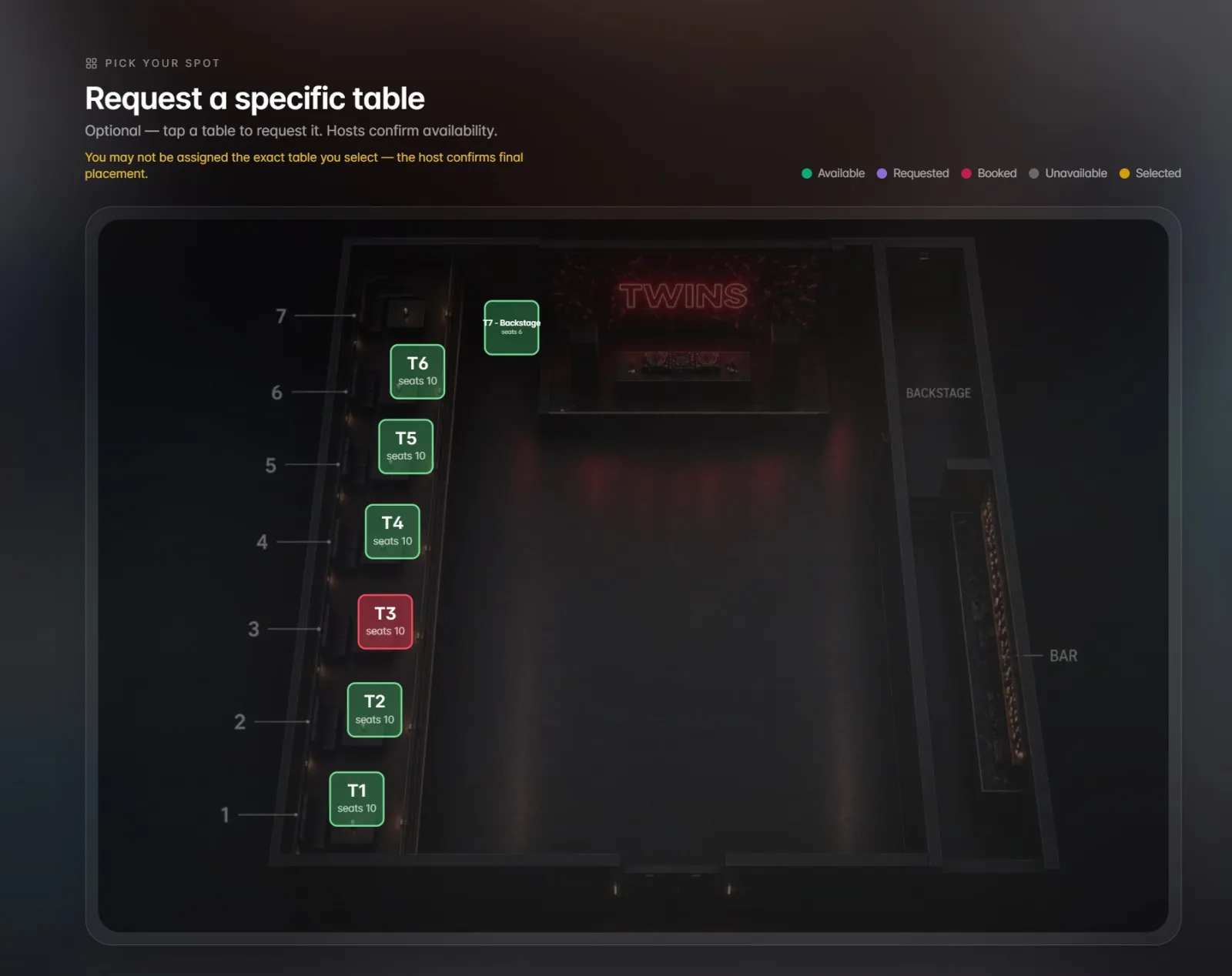
Fig. 01 · Guest-facing table selection over a photograph of the real room. Tables carry seat counts; the legend shows available, requested, booked, unavailable and selected. Guest details blurred at source.
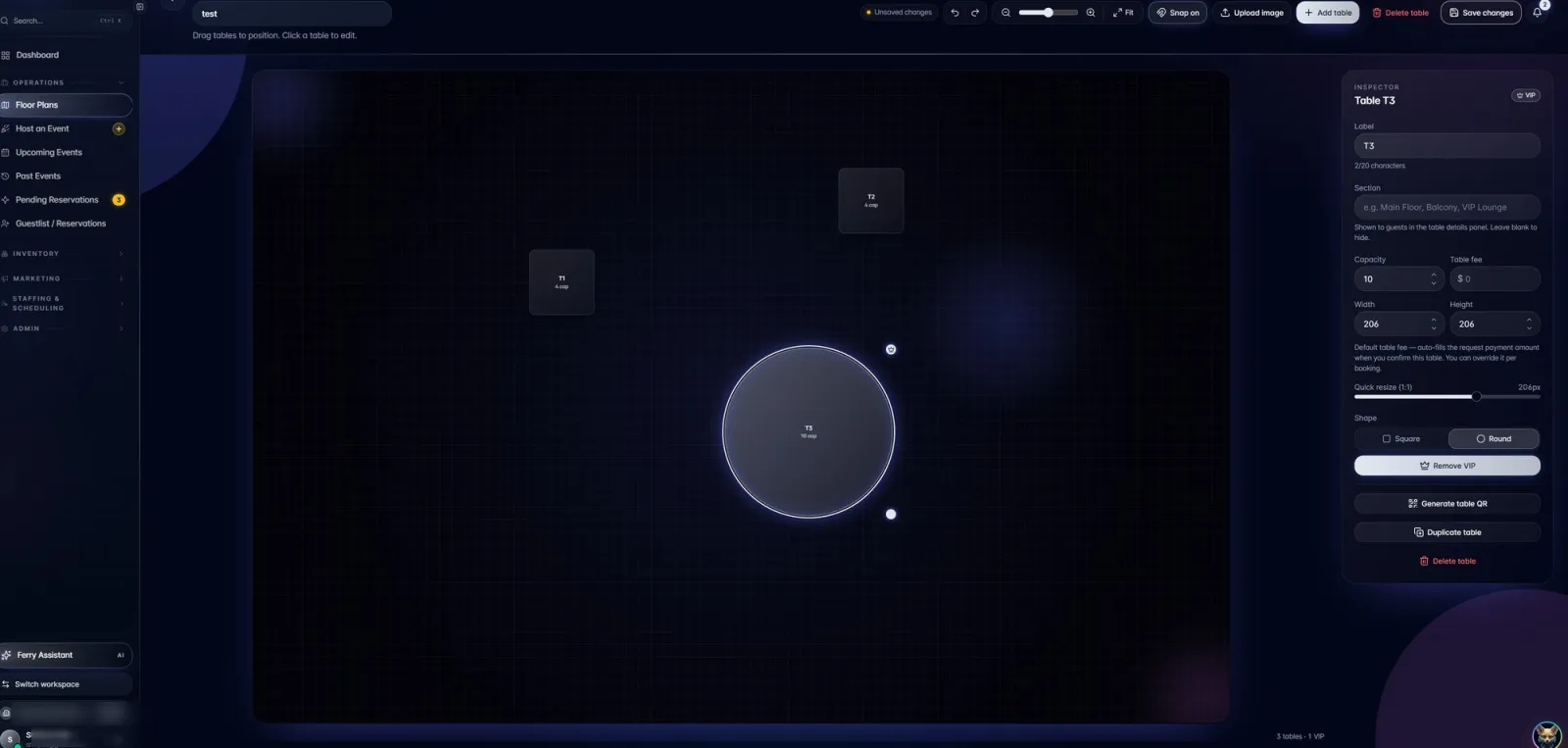
Fig. 02 · Operator floor plan editor. Every table carries a label, section, capacity, fee, shape, VIP flag and its own QR code.
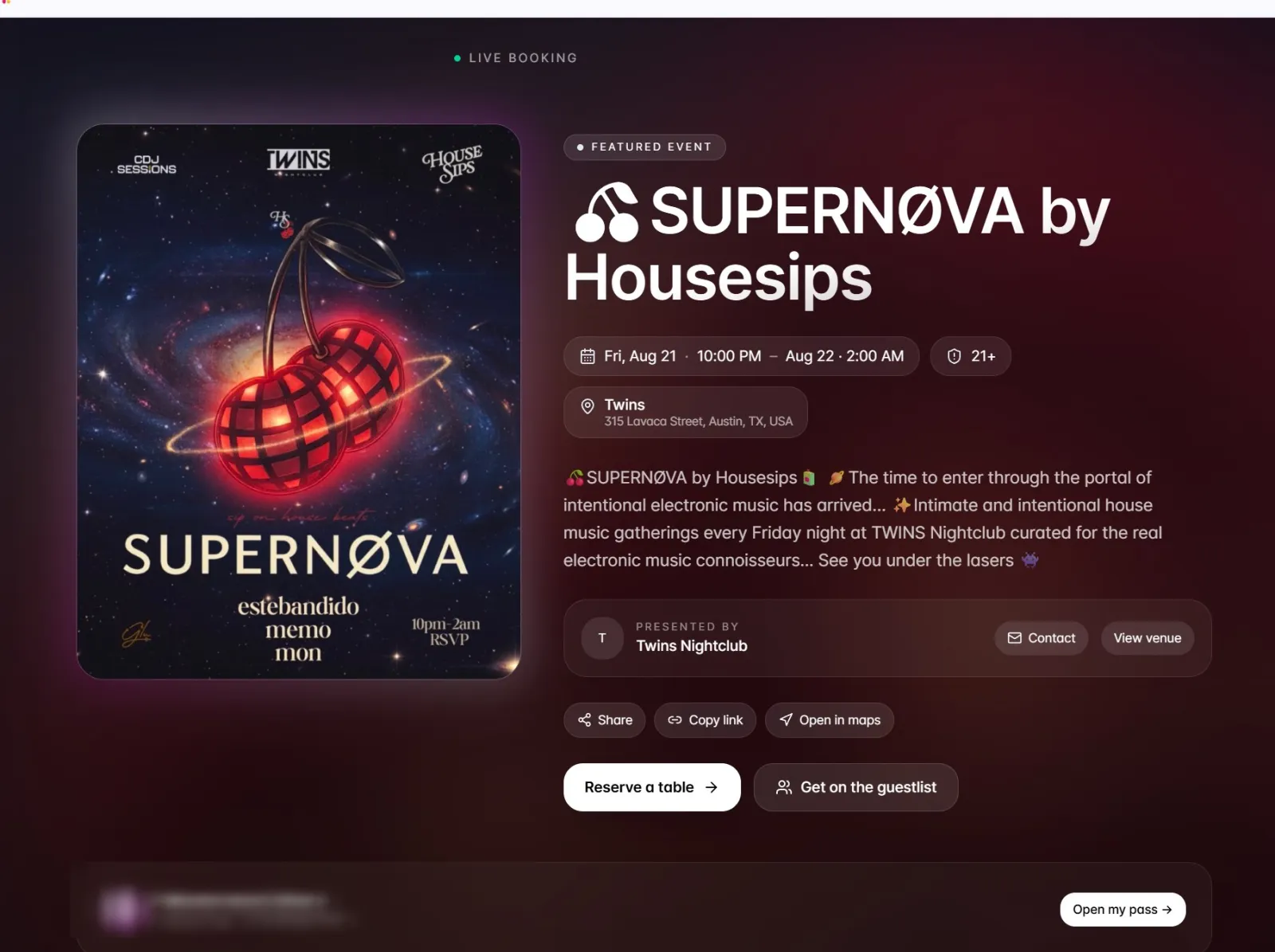
Fig. 03 · A live public event page for a real event at a real venue. One page, two ways to book: reserve a table or get on the guestlist.
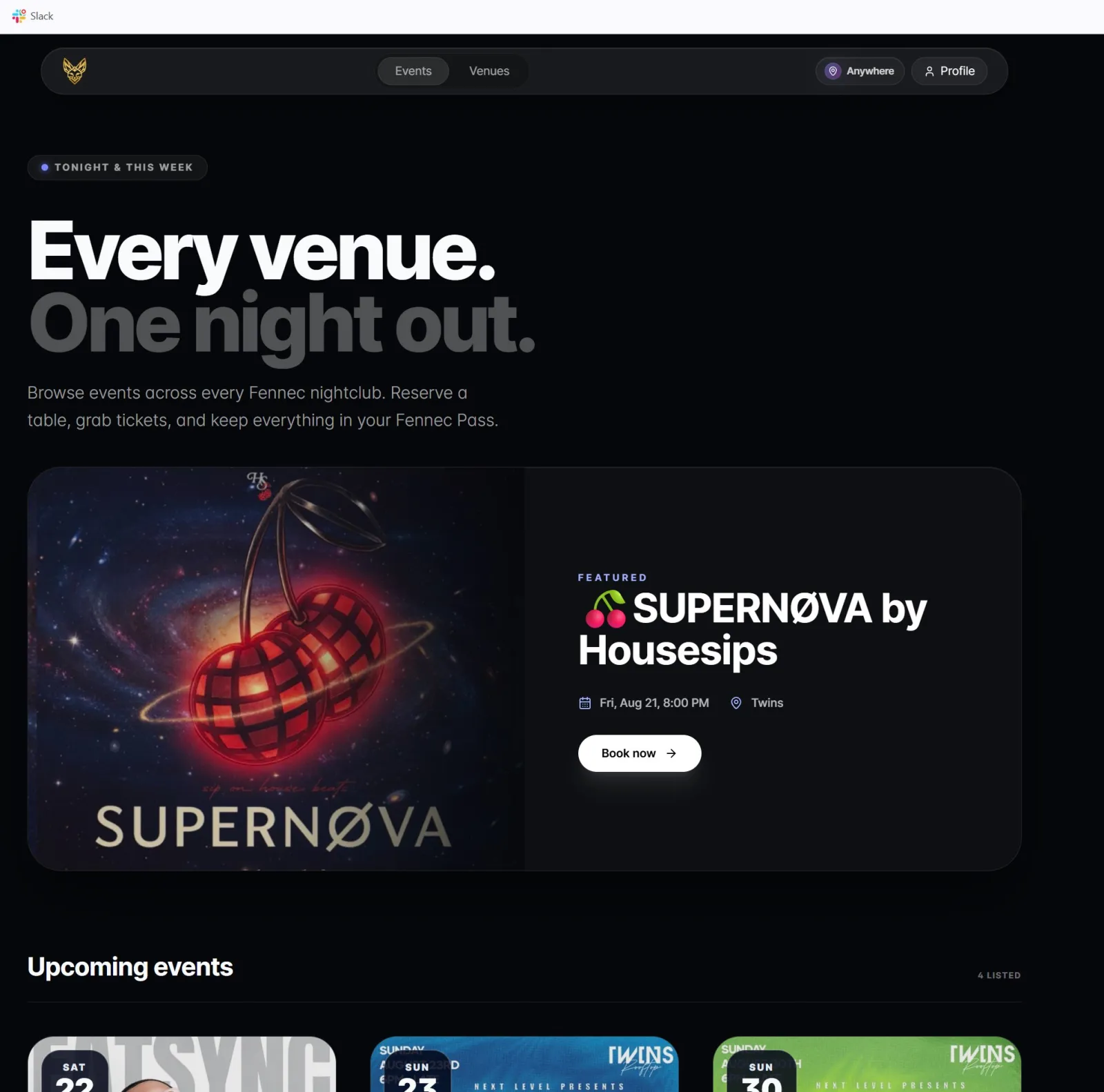
Fig. 04 · The guest-facing feed of every event across the Fennec network.
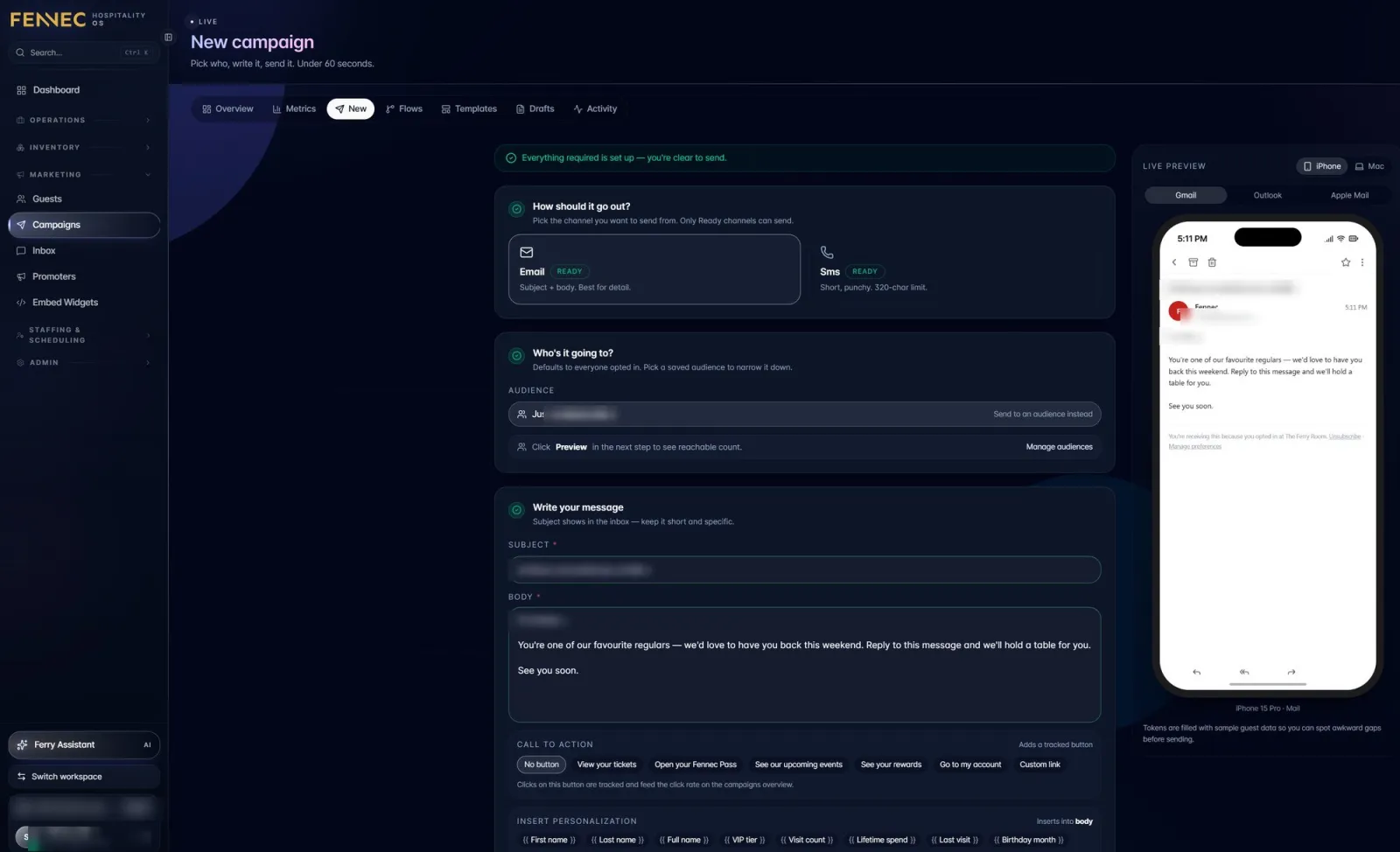
Fig. 05 · Campaign composer: the campaign starts from the live guest list, not a stale export.
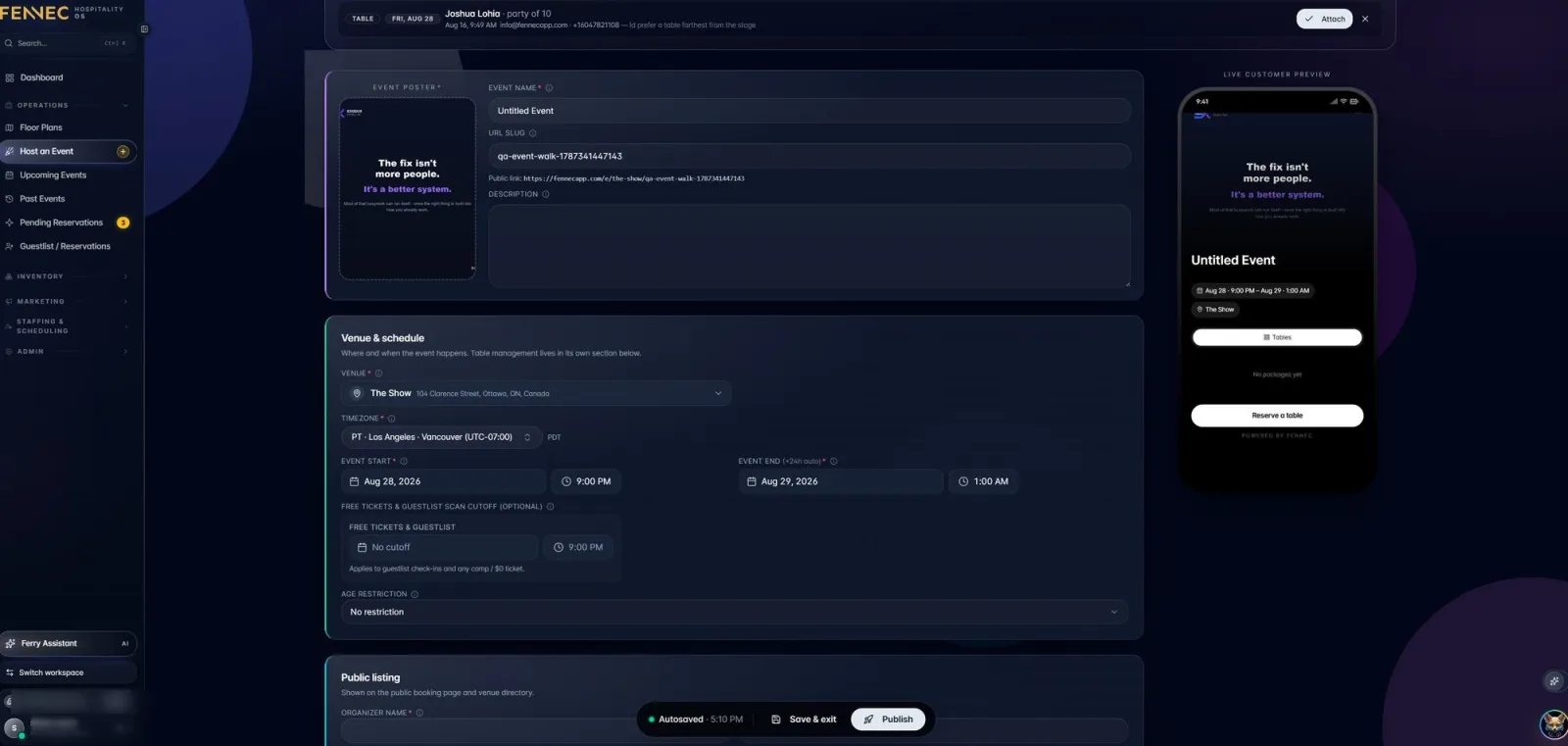
Fig. 06 · Event builder. The public page is generated from the event the operator built, so the two can never drift.
Seven module families
The floor, the door, the bar, the bottles, the guest, the campaign, the count.
Off one set of records that every surface reads at the same time. POS connectors: Square, Toast, Lightspeed.
- 016 modules
Events and floor ops
The room, as software. One layout kept true from the moment a host activates it to the moment the last tab closes.
- 028 modules
Ticketing and guests
One guest identity from the first ticket to the fifth visit, across every event and every venue on the network. The scanner at the door reads the same record the promoter sold from.
- 032 modules · 3 connectors
POS and payments
The till stays where it is. Two-way sync with Square, Toast and Lightspeed, and each bar gets its own controls on top.
- 04
Inventory
Count what left the bottle and compare it against what was sold.
- 05
Staff
Take the pooled gratuity and divide it by rules agreed before the shift started.
- 06
Media and marketing
The guest list already lives in the system, so the campaign does not start in a separate tool with a stale export.
- 07
Intelligence
Ferry AI and the Revenue Copilot read what the other six families write.
09 · Ferry AI · inside Fennec · Live
AI works better when it knows the whole operation.
Ferry is a roster, not a chat. Each agent owns one part of the venue's operation and reads the same record as every other surface, which is the only reason an agent can tell you what is leaking. Architected by Vishal, the same pair of hands on the Uniserve build.
Fig. 09 · Agent network architecture
above · the operator decides · behind · one record of the night · below · the systems
Above · operator
The price, the send, the hire stay with a person.
Orchestrator
Ferry
Reads every signal, routes work to the right specialist.
Events
Ops and live night
Marketing
Promos and campaigns
Inventory
Stock and bar
Staff
Promoters and shifts
Behind · one record
Event · table · tab · guest
Below · systems
Square, Toast, Lightspeed · ticketing & scanner · guest CRM · inventory
Events agent
Runs the live floor: tables, guestlist, door flow. Re-balances tables when the night shifts.
- input
- Event published, guest request, door scan
- context
- Floor plan, reservations, guestlist
- tools
- Table map, guest CRM, scanner
- action
- Re-balances tables, confirms placements with the host
- boundary
- Host confirms final seating
Marketing agent
Drafts campaigns and SMS blasts in the venue's voice from the live guest list.
- input
- Event drop, quiet night, VIP arrival
- context
- Live guest list, past attendance, brand voice
- tools
- Campaign composer, SMS
- action
- Drafts the campaign and the blast
- boundary
- A person approves the send
Inventory agent
Tracks bottles, mixers and 86'd items in real time. Re-orders before you run out.
- input
- POS sales, bottle service, 86'd items
- context
- Stock counts, supplier history, price
- tools
- Live inventory, reorder
- action
- Flags the reorder line before it runs dry
- boundary
- A person places the order
Staff agent
Watches promoter performance, shifts and payouts.
- input
- Shifts, promoter lists, payouts
- context
- Promoter performance, schedule
- tools
- Staffing, payouts
- action
- Watches performance, pings the right host when VIPs arrive
- boundary
- Owner sets pay and hires
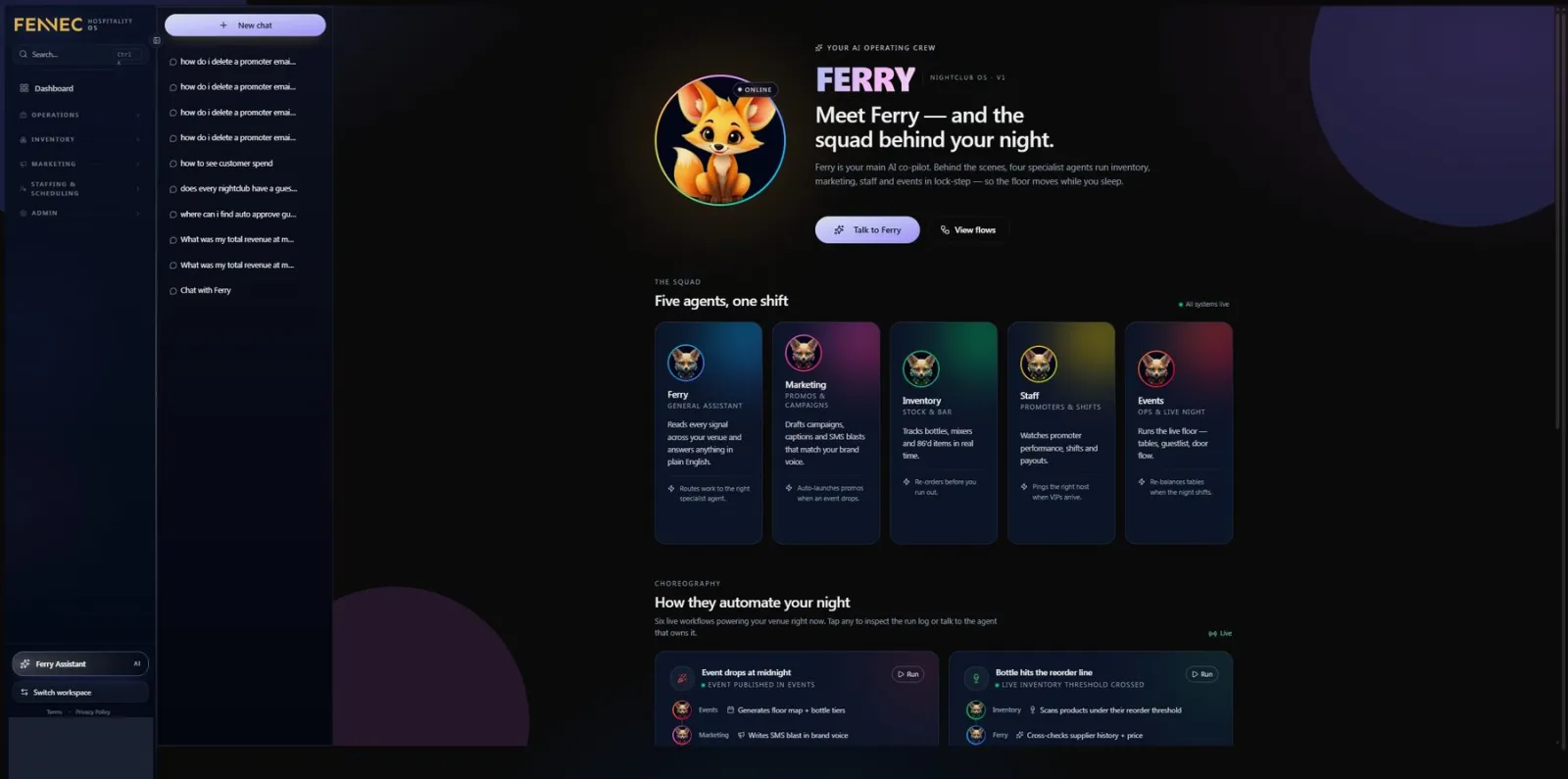
Live product · Ferry inside Fennec
The real screen. Five agents, one shift, and the run log of the workflows they own. The operator asks in one place instead of opening five modules.
Automate work. Not accountability. Anything irreversible waits for a person.
06 · AI and automation
Ferry AI is a roster, not a chat.
A coordinated agent network across operations, guests, campaigns, inventory and service, plus a Revenue Copilot that reads voids, pricing, promoters and inventory. Each agent owns one part of the operation and reads the same record as every other surface.
07 · Human role
A guest request is a request, not a booking.
The host works the same map and confirms where the party actually lands, which is how a venue keeps control of its best tables without making a guest guess at a seating chart.
08 · Result
Four named venues. More than twenty event companies. In production tonight.
Every venue on the network runs its own nights, its own promoters and its own bar. They share one system, which is why an event published in one room shows up in a feed that guests of the others already use. No hours-saved or revenue figure is claimed for Fennec on this site.
09 · What came next
The same architecture, now on the Uniserve build.
Fennec is where our own architecture came from. Vishal built the core of it and the Ferry agent network, and that is the same pair of hands on the Uniserve engagement.
The network · live venues running on Fennec tonight
- Harbour Event Centre
- TradeX
- The Pit UBC
- The Show Ottawa
- 20+ event companies
Source of every statement on this page · exdsconsulting.com/work-fennec · verified 2026-09-16
Free · 30 minutes · a founder answers
Your business does not need five tools either.
Tell us the workflow that runs through a group chat at 11pm. We map where it leaks and say plainly whether it is worth building.