

Skip to content

Your business should filter the noise before it reaches you.

Old way out. New way in.

Move yourbusiness forward.

Exodus redesigns outdated operations using AI, custom software and automation built around how your business actually works.

Two founders. Direct access. No account managers, no slide decks. You own the code. The number is agreed before we start.

5 engagements · 2 live · 1 shipped · 2 in build
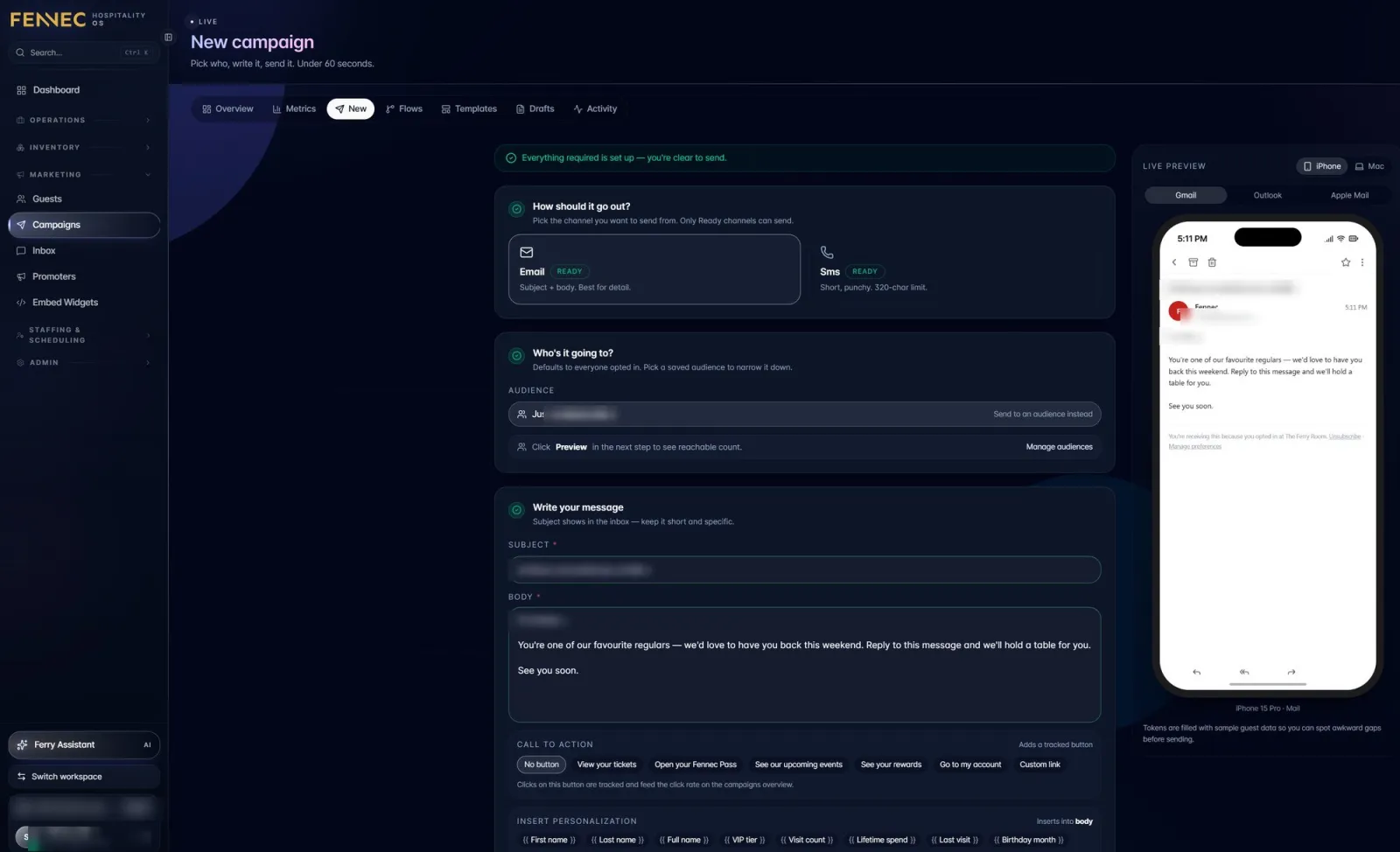
Fennec live at Harbour Event Centre, TradeX, The Pit UBC, The Show Ottawa
20+ event companies publishing on the Fennec network

02 · The human integration

Your team should not be the API.

Every system sends its data to a person. The person moves it into the next system. More systems arrive. Eventually everything routes through the human, and the human is the only thing holding the operation together.

Owners do not call us about AI. They call us about three sentences.

  1. 01

    The same numbers get retyped into three systems

    A booking is entered once by the guest, once by the host and once again at close. Two of those are unpaid data entry.

  2. 02

    A web lead sits until tomorrow morning

    Contacting a web lead inside an hour made firms about 7 times more likely to qualify it than waiting an hour longer. Harvard Business Review, 2011.

  3. 03

    Support answers the same questions every week

    A high volume of repeat questions arrives through the support channels at Uniserve. Most already have an answer written down somewhere the customer could not find.

Fig. 02 · Where the data goes
EXODUS · OPERATING LAYERCONNECTED · AUTOMATEDCRMEMAILPOSCALENDARSPREADSHEETACCOUNTINGINVENTORYSUPPORTDATA MOVER

Illustrative workflow, not a client diagram.

03 · The cost

One day of work that is not judgement.

08:00a working day, tile by tile

Automate the repeatable. Keep the judgement.

88%

of companies report using AI. About 6% attribute more than 5% of profit to it.

McKinsey, State of AI, 2025

93%

of AI budgets go to technology. About 7% goes to the people expected to use it.

Deloitte, 2025

04 · Exodus

See how your business actually runs.

The first call is a free operations audit. You walk us through the workflow that hurts most, we put your own hours and hourly rate against it while you watch, and you leave with a map of where the time and the money leak.

Most businesses are a black box, even to the people running them. Inputs go in. Outputs come out. Nobody can see the eleven manual steps in between.

Now we know what to build.

Thirty minutes. No demo, no slide deck, no requirements questionnaire. One workflow, then the numbers behind it. The map is yours whether or not you hire us.

Book the audit call30 minutes · free · a founder answers

05 · The build

AI is not the product. The better way of working is.

We do not force AI into every problem. Some businesses need better software, a workflow, an integration, an assistant, or a whole operating system. The technology follows the operational problem, not the other way round.

  1. 01

    See

    Understand how the business actually runs.

    Every engagement starts with the free operations audit. We sit with the team that does the work, map where the hours go, and score the candidates on return and feasibility. Nothing gets built before the arithmetic is on the page.

    Free · 30 minutes · a founder answers

    You leave with the leak map and the arithmetic, whether or not you hire us.

  2. 02

    Build

    Software, automation and assistants around the real workflow.

    The two or three things that move the signed number, not a platform. Sometimes that is an AI assistant. Sometimes it is a POS integration. Sometimes it is the operating system the business should have had.

    • 01Customer-facing assistants

      In build

      A chatbot and a voice agent that answer your customers directly, from your own material rather than the open internet, and hand over to a person the moment the question stops being routine.

      Running for · Uniserve Communications

    • 02Ticket triage and support automation

      In build

      Classification and routing, repeat questions handled without a person touching them, and an approval gate: no reply reaches a customer without a human clicking.

      Running for · Uniserve Communications

    • 03Knowledge and retrieval

      In build

      Question and answer over your own documents, with the citation attached, so every answer can be checked in one click.

      Running for · Uniserve Communications

    • 04Custom software and operating systems

      LiveShippedIn build

      When no product on the market fits the way you actually work, we build the system. Not a dashboard bolted onto a spreadsheet: the thing the business runs on.

      Running for · Fennec, Palapa Tours, B-Side Group

    • 05POS, payments and integrations

      Live

      Two-way sync with the point of sale you already use. One place to edit, everywhere else follows.

      Running for · Fennec (Square, Toast, Lightspeed)

  3. 03

    Advance

    Measure what changed. Keep improving.

    The clock starts at deployment. Once the data is clean and the process is real, agents and copilots are worth building, because an agent cannot tell you what is leaking if the numbers sit in five accounts that never speak.

    • 06Operational intelligence

      Live

      Agents and copilots that read the whole operation and surface what is leaking, once the data is clean and the process is real.

      Running for · Fennec (Ferry AI, Revenue Copilot)

    Measured · against the signed page

    Same method, same process, arithmetic printed. If the bar has not cleared, we keep working at no additional cost until it does.

    How we charge

Custom software · Palapa Tours Ottawa · Shipped

Software should come from the workflow.

Not the other way around. On a floating tiki-bar cruise the tip-out was worked out by hand after a long shift, and the split moved depending on who did the arithmetic. The fix was not a bigger spreadsheet. It was making the rule the only thing that decides the number.

Small problem. Real operational impact.

Consistent payouts. Transparent logic. A question about last weekend has an answer instead of an argument. The client owns the code.

Read the Palapa study

06 · The system

Old way out. New way in.

The old way

  1. 01Email
  2. 02Spreadsheet
  3. 03Manual follow-up
  4. 04Copy / paste
  5. 05Someone remembers
  6. 06Another spreadsheet
  7. 07Meeting
  8. 08Manual report
  9. 09Mistake
  10. 10Rework

The new way

  1. 01Connected data
  2. 02Automation
  3. 03Custom software
  4. 04AI where it pays
  5. 05Real-time visibility
  6. 06Human oversight
  7. 07Better operations

Software does sorting, summarising, drafting, reconciling.

People do the exception, the price, the hire, the send.

07 · The proof

The new way is already running.

Not a mockup. Fennec is the operating system we co-founded, live in venues tonight. What follows is every engagement at its real status.

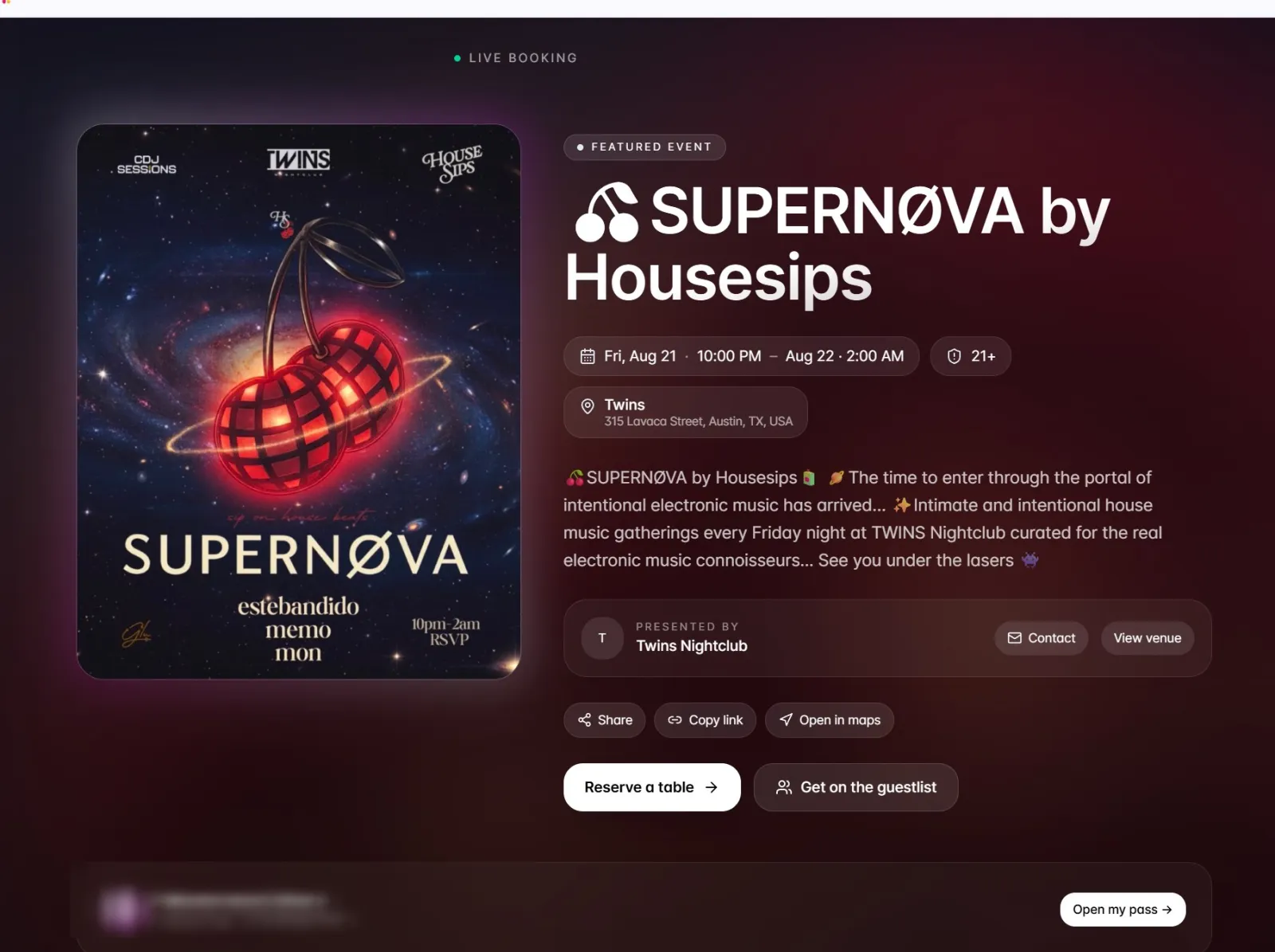
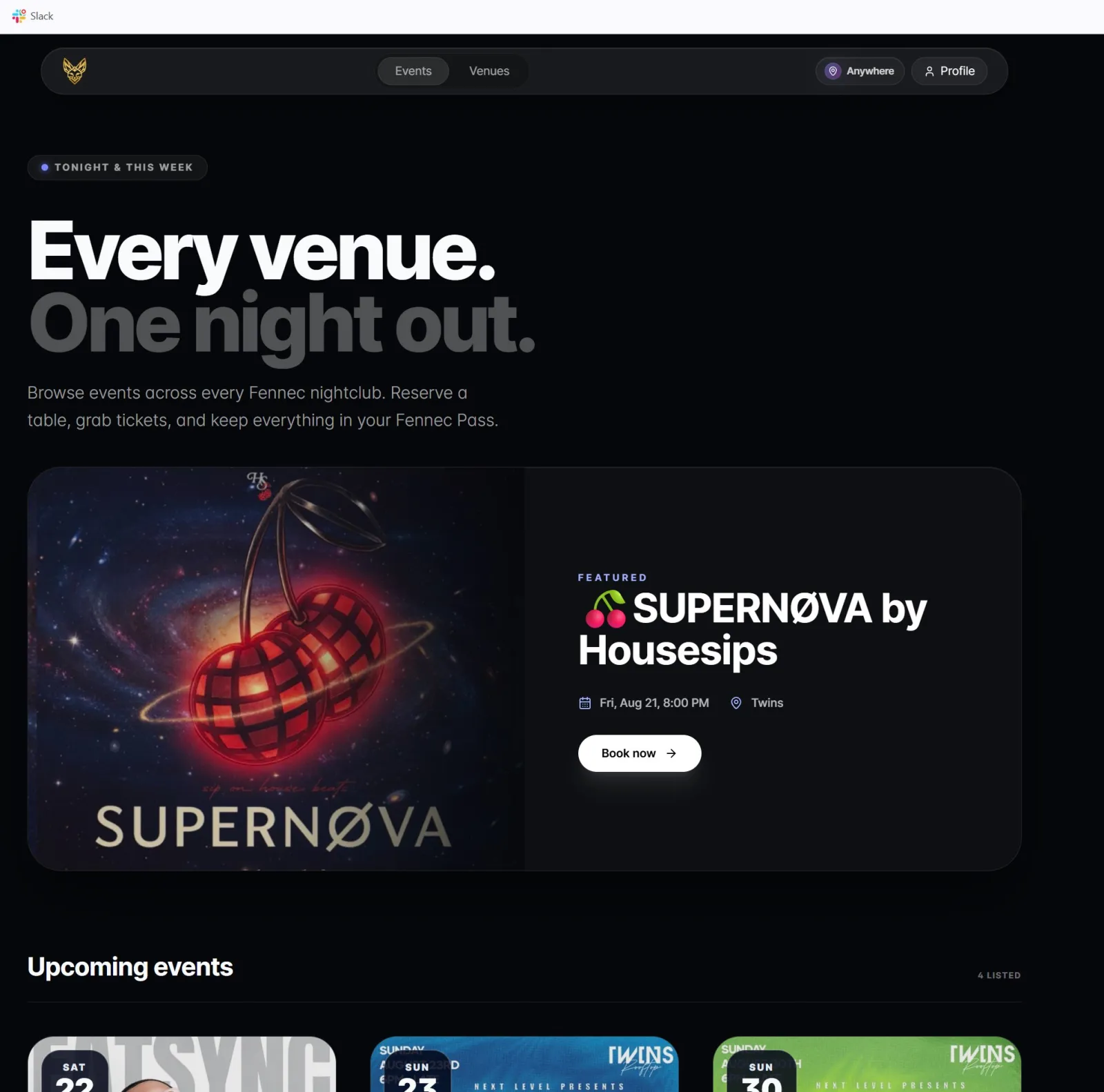
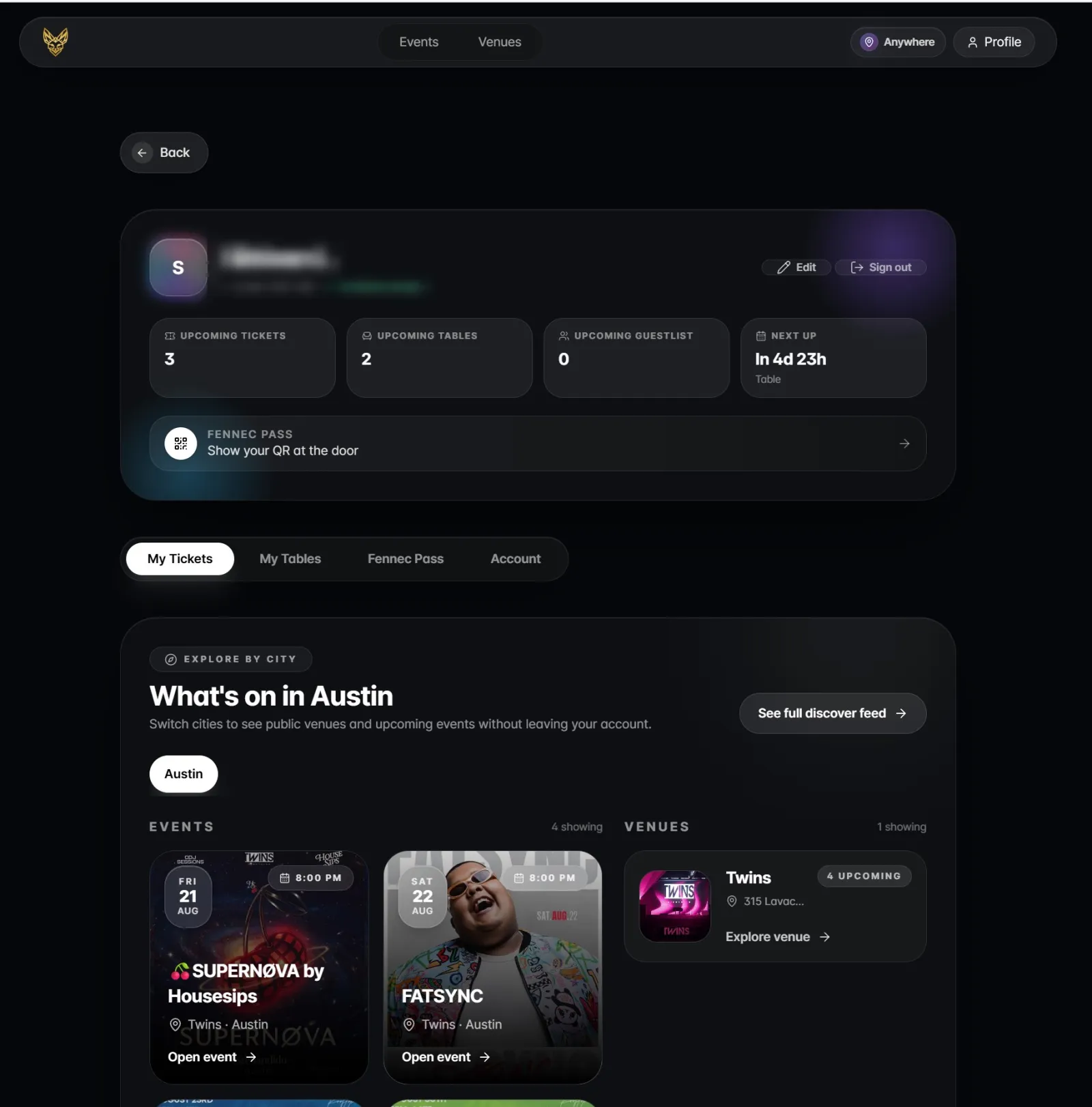
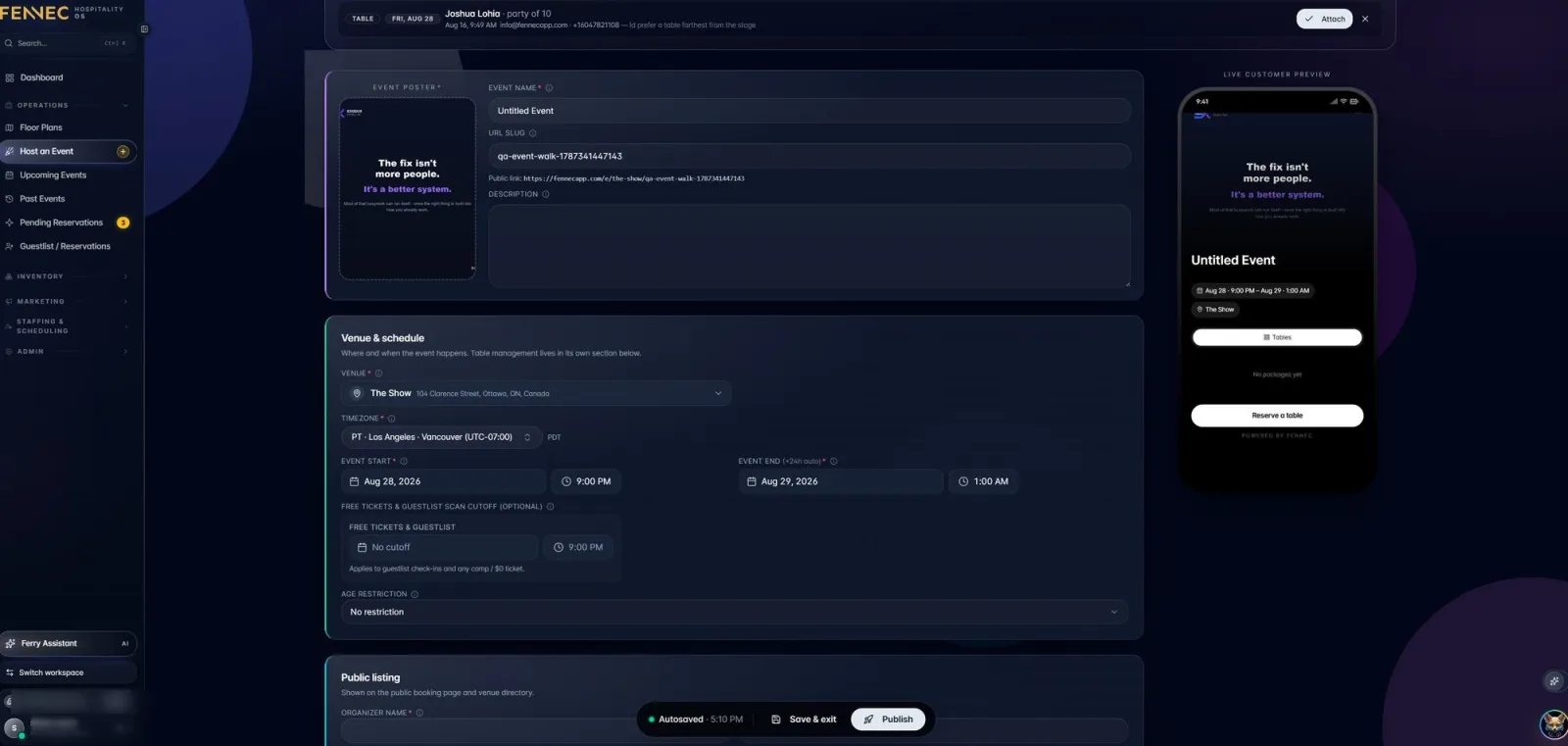
Real screens from the live product · 4 named venues · 20+ event companies

08 · Fennec · Live

One system running the room, the door and the bar.

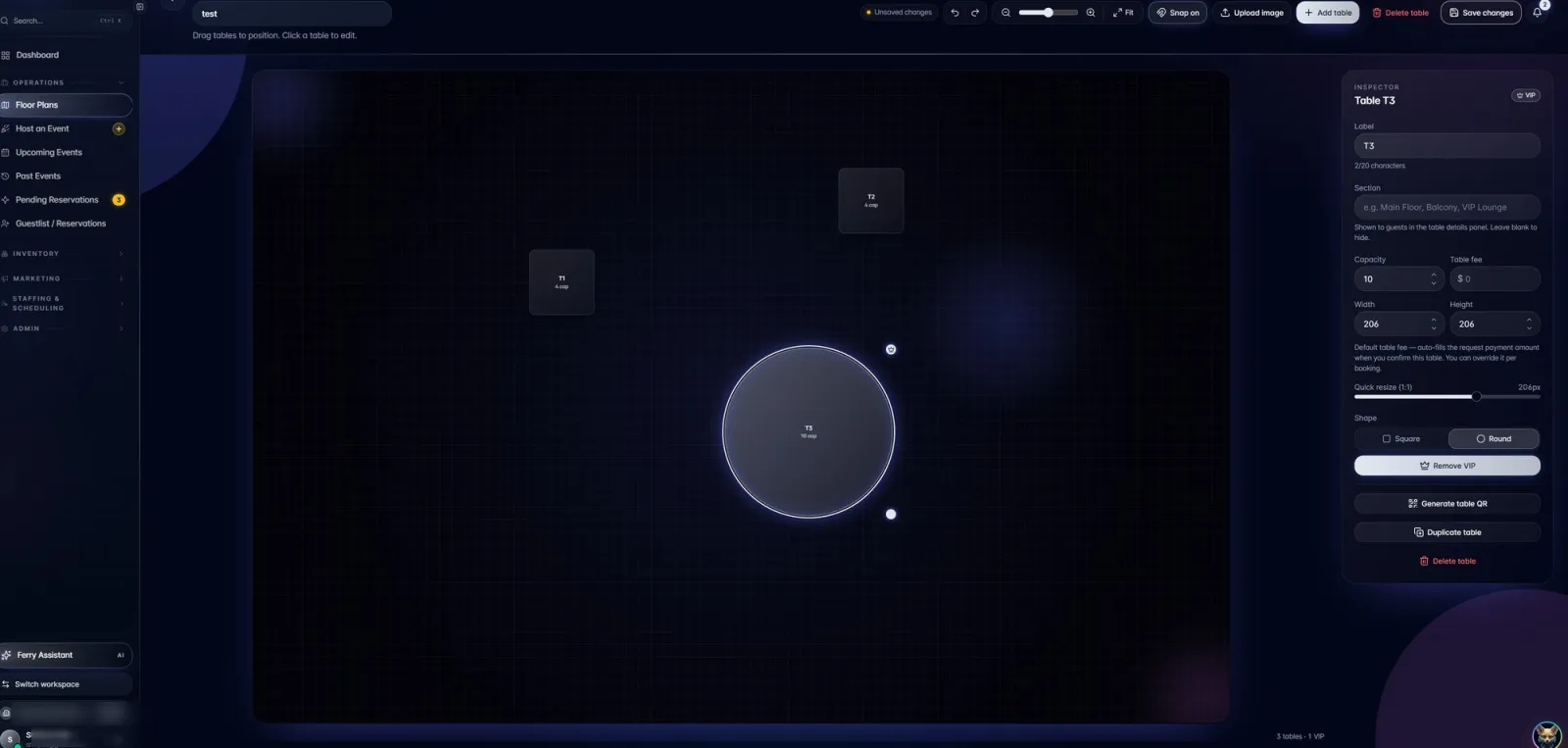
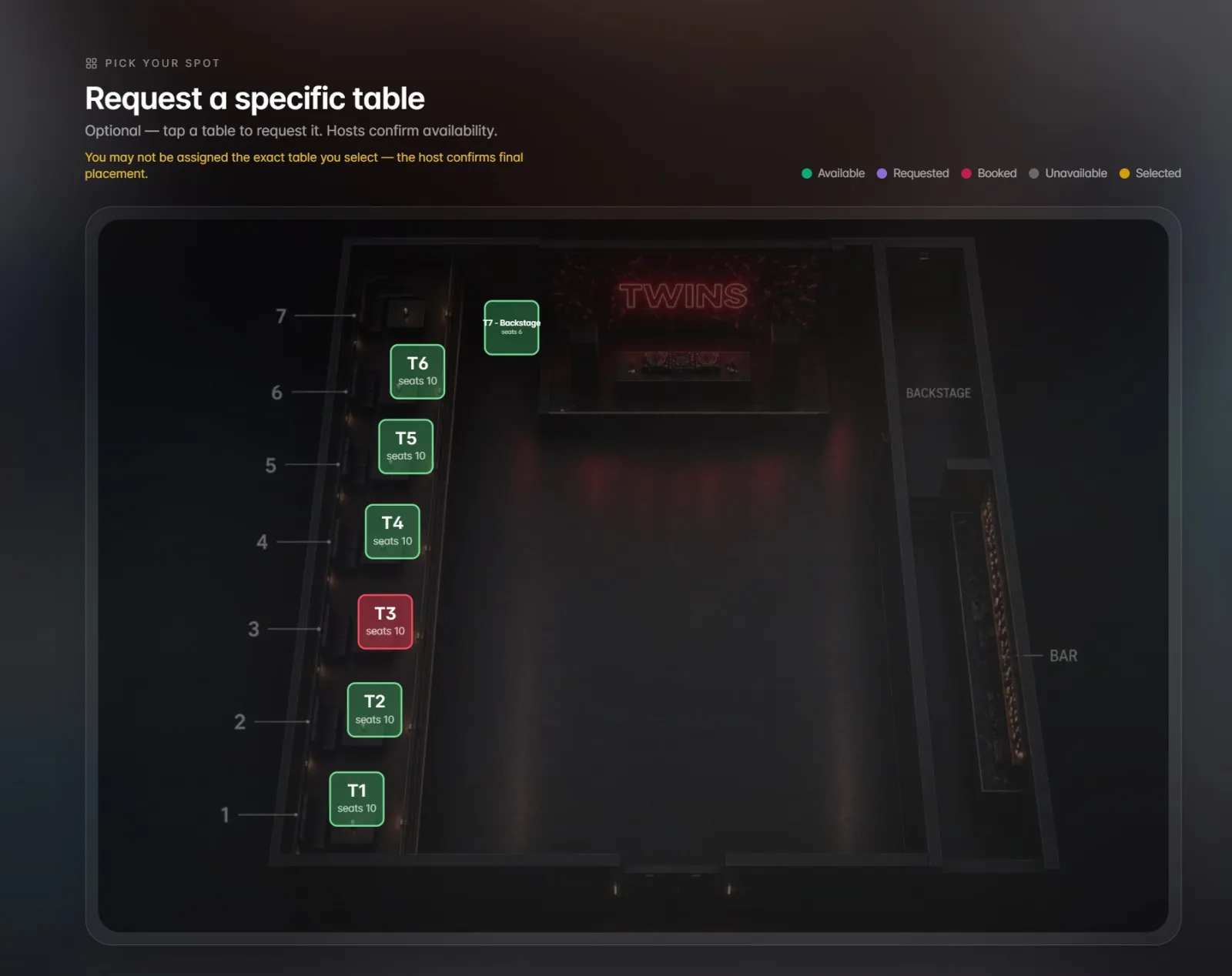
A venue does not need five tools. It needs one record of the night. Fennec is the operating system we co-founded and still build: floor plans, live ops, ticketing, guest CRM, bottle service, inventory, campaigns and analytics, off one set of records that every surface reads at the same time.

Not an automation. A full operating system, in production tonight.

Live at Harbour Event Centre, TradeX, The Pit UBC, The Show Ottawa, with 20+ event companies publishing on the network. Two-way POS sync with Square, Toast and Lightspeed.

Read the Fennec study

09 · Ferry AI · inside Fennec · Live

AI works better when it knows the whole operation.

Ferry is a roster, not a chat. Each agent owns one part of the venue's operation and reads the same record as every other surface, which is the only reason an agent can tell you what is leaking. Architected by Vishal, the same pair of hands on the Uniserve build.

Fig. 09 · Agent network architecture

above · the operator decides   ·   behind · one record of the night   ·   below · the systems

  1. Above · operator

    The price, the send, the hire stay with a person.

  2. Orchestrator

    Ferry

    Reads every signal, routes work to the right specialist.

  3. Events

    Ops and live night

    Marketing

    Promos and campaigns

    Inventory

    Stock and bar

    Staff

    Promoters and shifts

  4. Behind · one record

    Event · table · tab · guest

  5. Below · systems

    Square, Toast, Lightspeed · ticketing & scanner · guest CRM · inventory

  • Events agent

    Runs the live floor: tables, guestlist, door flow. Re-balances tables when the night shifts.

    input
    Event published, guest request, door scan
    context
    Floor plan, reservations, guestlist
    tools
    Table map, guest CRM, scanner
    action
    Re-balances tables, confirms placements with the host
    boundary
    Host confirms final seating
  • Marketing agent

    Drafts campaigns and SMS blasts in the venue's voice from the live guest list.

    input
    Event drop, quiet night, VIP arrival
    context
    Live guest list, past attendance, brand voice
    tools
    Campaign composer, SMS
    action
    Drafts the campaign and the blast
    boundary
    A person approves the send
  • Inventory agent

    Tracks bottles, mixers and 86'd items in real time. Re-orders before you run out.

    input
    POS sales, bottle service, 86'd items
    context
    Stock counts, supplier history, price
    tools
    Live inventory, reorder
    action
    Flags the reorder line before it runs dry
    boundary
    A person places the order
  • Staff agent

    Watches promoter performance, shifts and payouts.

    input
    Shifts, promoter lists, payouts
    context
    Promoter performance, schedule
    tools
    Staffing, payouts
    action
    Watches performance, pings the right host when VIPs arrive
    boundary
    Owner sets pay and hires
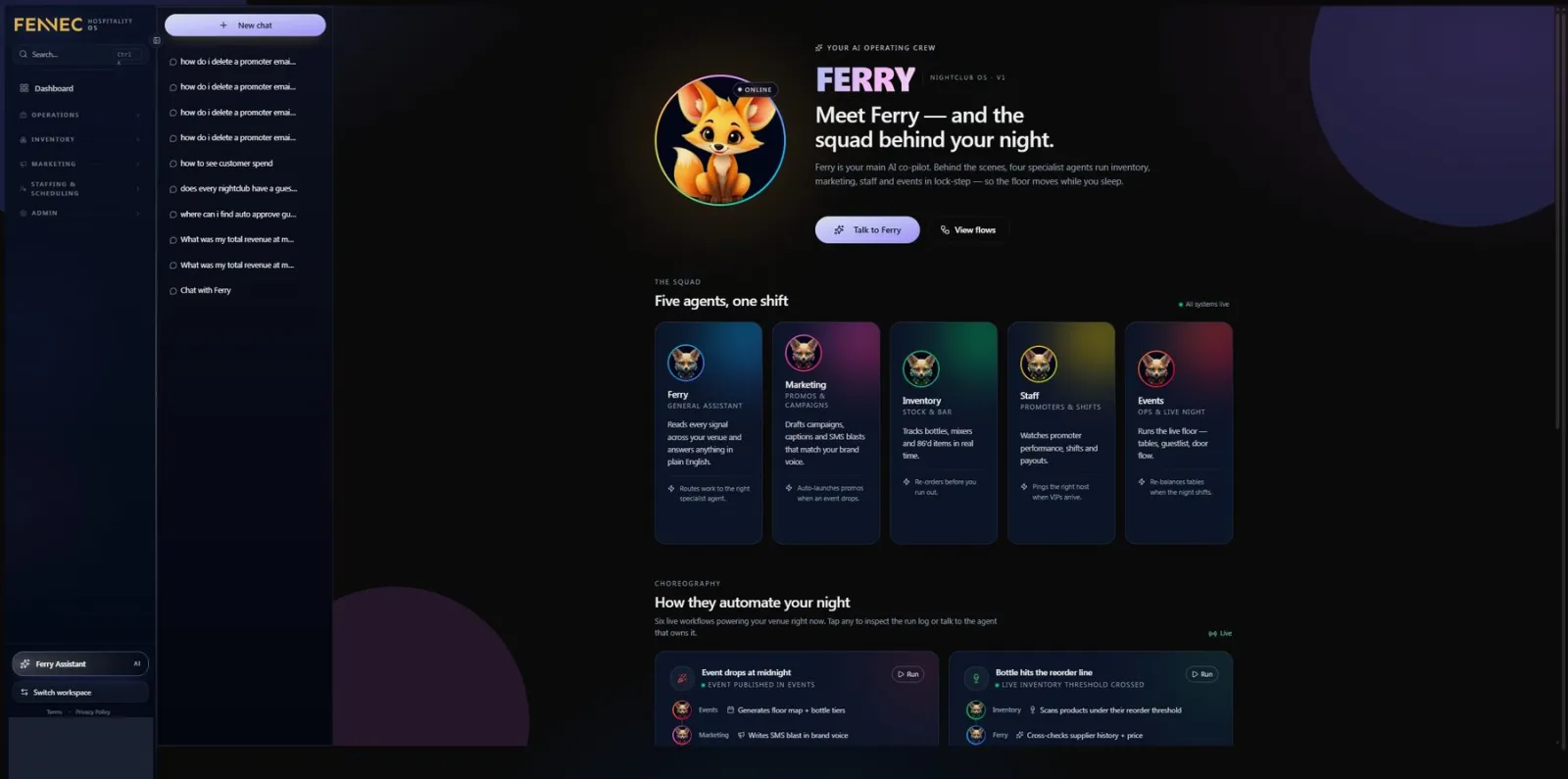
Ferry AI inside Fennec: the agent roster showing Ferry, Marketing, Inventory, Staff and Events agents, and the live workflows they run.

Live product · Ferry inside Fennec

The real screen. Five agents, one shift, and the run log of the workflows they own. The operator asks in one place instead of opening five modules.

Automate work. Not accountability. Anything irreversible waits for a person.

10 · How we work and charge

Nothing is built before the number is on the page.

Five steps. The bar is agreed in writing before anything is built, the clock starts at deployment, and if the system misses the bar we keep working at no additional cost until it clears.

  1. 01 · 30 minutes, free

    Talk

    You describe the workflow that hurts most. We put your own hours and hourly rate against it while you watch. You leave with the leak map either way.

  2. 02 · Before any build

    Map

    The one or two builds worth doing, with the numbers beside them. Constraints go in here: hosting, data residency, the till that stays where it is.

  3. 03 · One page, both names

    Sign

    The process, the current numbers, the bar, the timeframe and how we will measure it. Nothing is built before this page exists.

  4. 04 · Scoped tight on purpose

    Build

    The two or three things that move the signed number, not a platform. Uniserve's programme runs three months.

  5. 05 · Clock starts at deployment

    Measure

    Same method, same process, arithmetic printed. If the bar has not cleared, we keep working at no additional cost until it does.

The guarantee · six terms, written down before we build

We stay until it pays.

Most AI work is sold on a promise and invoiced on effort. We would rather be invoiced on a number you signed off on. The bar and the timeframe are set per engagement, and nothing here guarantees a particular dollar amount.

  1. 01

    A signed baseline before any build

    We measure the process as it runs today and write the numbers down. You sign off on the exact figures we are measured against.

  2. 02

    The clock starts at deployment

    Not at signature, not at kickoff. The measurement window opens the day the system is in your team's hands doing real work.

  3. 03

    If it misses the bar, we keep working at no additional cost

    Same scope, same team, no new invoice, until the agreed bar clears.

  4. 04

    Cancel at any time

    No minimum term and no exit fee. You keep what has been built and delivered to that point.

  5. 05

    A free operations audit up front

    Before money changes hands we map where time and money leak and show the arithmetic. You keep that map whether or not you hire us.

  6. 06

    You own the code

    The repository, the data and the deployment are yours. No licence to renegotiate, no hostage fee to leave.

Fig. 10 · Run your own numbers

The number we would be measured against.

Put your own headcount, hours and hourly cost in. Whatever this prints is the kind of figure that goes on the signed page, once we have measured it with you rather than guessed it.

3

1 to 50

6 h

1 to 40

$40

$15 to $200

864

Hours recovered per year

$34,560

Dollars recovered per year

3 × 6 hrs/week × 48 weeks = 864 hrs/year
864 hrs/year × $40/hr = $34,560/year

An estimate from numbers you enter, not a promise. 48 working weeks assumed. Your real figure depends on the process we replace, and only the measured version goes on the signed page.

11 · Founders

You work with the builders.

Not an account manager, then a salesperson, then a project manager, then an outsourced team. One of us designs it, one of us builds it, and both of us are in the room.

We built Fennec first. Sitting with venue operators on live nights showed us how much a business loses to manual work, fragmented systems and bad visibility. The lesson did not stop at nightlife, so Exodus takes the same approach into other industries: understand the operation, build what it actually needs.

Shiv Lohia, Co-Founder of Exodus Consulting

Co-Founder · The front half

Shiv Lohia

Shiv studied how people behave and how companies make money, then spent his career on the place those two meet. BA Psychology and a Master of Management from UBC. At Apply Digital he designed user experiences for large clients, including the Harvard Business School site. He co-founded Fennec. On an Exodus engagement he sits with the owner, watches the process as it actually happens, and writes the numbers down before a line of code exists.

  • BA Psychology, UBC
  • Master of Management, UBC
  • Co-founder, Fennec
  • Apply Digital: Harvard Business School site

shiv@exdsconsulting.com
Vishal Desh, Co-Founder of Exodus Consulting

Co-Founder · The build

Vishal Desh

Vishal is the engineer. Computer Science and a Master of Management from UBC, and a working stack of Python, AWS and Azure. He co-founded Fennec with Shiv and architected its core and its Ferry AI agent network. On an Exodus engagement he owns the build: the data layer, the models, the hosting constraints, and the part where the system has to keep working on a Saturday night.

  • Computer Science, UBC
  • Master of Management, UBC
  • Python, AWS, Azure
  • Architect, Fennec core and Ferry AI
vish@exdsconsulting.com

Different backgrounds. Same question.

Why are businesses still running modern operations through manual systems?

  1. 01

    Two founders on every engagement

    The people who scope the work are the people who ship it.

  2. 02

    Direct access

    You email us and you get us. One address, no ticket queue.

  3. 03

    No account managers

    Nobody bills you to relay a message.

  4. 04

    No juniors on your budget

    If it gets built, one of the two of us built it.

  5. 05

    No deck-only strategy

    A slide is not a system. Every engagement ends in software that runs, and you own the code.

  6. 06

    We learn the business first

    We sit with the team that does the work and map where time and money leak. The build starts after that.

Film · documentary · muted until you press play

In production

Why Exodus exists.

Building Fennec exposed how much companies lose doing things manually. That led to work across telecom, hospitality and municipal politics. Now Exodus enters a business, understands the operation, and builds the system that moves it forward.

Placeholder frame for the founder film, which has not been shot yet.

12 · Departure

Ready to depart the old way?

Thirty minutes, and you leave with the arithmetic either way. Tell us the process that annoys you most. We will map where it leaks, put a number on it, and say plainly whether it is worth building. Two founders on the call.

Free first conversation. No commitment. You keep the map.

One process, not a list. Rough is fine. We tighten the numbers together on the call.

Tags appear as you type. Nothing is sent until you choose to.
Opens a draft email to shiv@exdsconsulting.com with your text in it. No form, no queue. A founder replies within one business day.